How to Read a Supplement Label
The single most useful skill for anyone who buys supplements, and it takes about ten minutes to learn.
Reading the Panel on Horsewood or Any Other Supplement
The Supplement Facts panel is regulated in format, which makes it far more informative than the marketing surrounding it. Read it in this order.
Serving size first, always. This is the number that rescales everything else. A panel written per capsule for a product taken twice daily means doubling every figure on it. A panel written per two-capsule serving already includes both.
Servings per container next. Divide capsules by daily servings and you know exactly how long a bottle lasts — and therefore the real cost per day, which is the only pricing figure that allows comparison between products.
Then the ingredient rows, with amounts and percentage daily values.
Then "other ingredients", which is where capsule material, fillers and allergens appear. This is where you find out whether a product is vegetarian.
The Four Places Horsewood-Style Labels Mislead
Not through dishonesty, usually, but through convention.
1. Serving size inflation. A panel showing impressive numbers per three-capsule serving, where a bottle of 90 lasts 30 days rather than 90. Always check what a serving is.
2. Proprietary blends. One total for several ingredients, with the order telling you only the descending sequence. The first ingredient could be 95% of the blend.
3. Compound weight versus elemental weight. "500 mg magnesium citrate" is not 500 mg of magnesium — the mineral is a fraction of the compound. Good labels state elemental content; many do not.
4. Extract ratios presented as equivalence. "10 mg from a 100:1 extract, equivalent to 1,000 mg of powder" is a real convention, but dry-weight equivalence is not the same as matching the standardised extract a trial actually used.
What a Horsewood-Style Label Cannot Tell You
Even a well-made label has limits worth knowing.
It does not tell you the product was tested. Unless a certificate of analysis is available, the panel is a declaration rather than a verification.
It does not tell you about bioavailability. Curcumin's absorption problem does not appear on any label, and neither does whether an absorption enhancer is present unless it is listed.
It does not tell you whether the amount does anything. That requires looking up the research separately, which is the step most buyers skip and the one that matters most.
And a label with no amounts at all — ingredients named on a website with no Supplement Facts figures published — tells you almost nothing beyond what is in the bottle. Naming is not disclosure.
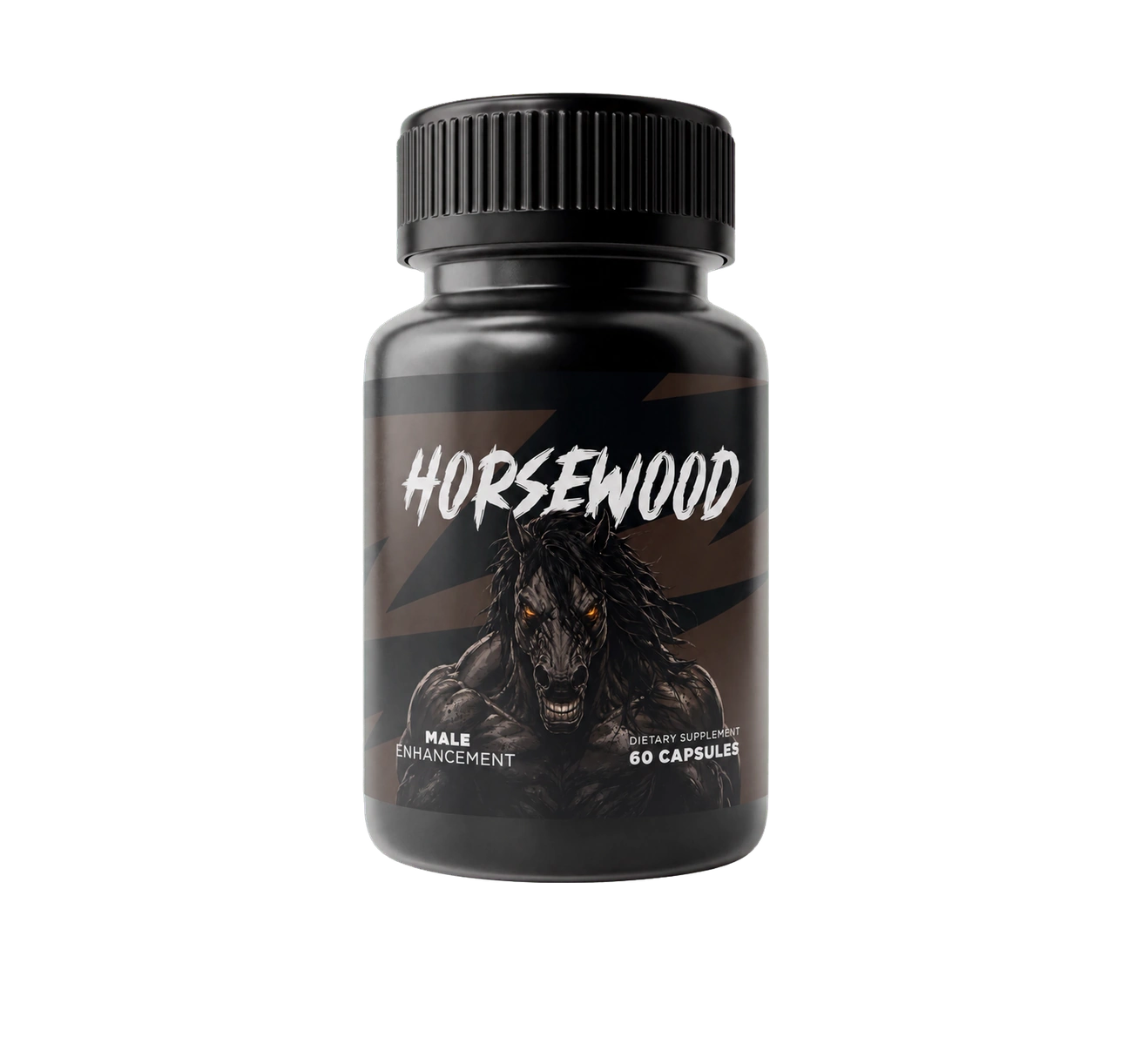
Horsewood names thirteen ingredients and doses none of them
This is the single most important thing to understand about the product, and it is awkward because the seller makes the opposite claim its headline selling point.
Its own words: "No Proprietary-Blend Games". "Named Doses, Not a Blend Fog". Thirteen ingredients "you can look up individually — not a fog of complexes with undisclosed amounts". "Each named, none hidden."
Yet no milligram figure is published for any of the thirteen. Not on the homepage, not in the ingredients section, not in the FAQ. The ingredients are named. They are not dosed. Those are different things, and only one of them lets you evaluate a formula.
To be fair, avoiding a proprietary blend is genuinely better than hiding ingredients inside one, and naming all thirteen is more than many competitors do. But a named ingredient with no amount attached tells you what is in the bottle without telling you whether there is enough of it to matter.
Why this matters arithmetically. A standard capsule holds roughly 500–800 mg of material in total. The studied amounts above, added together, come to several grams a day. Thirteen ingredients cannot all appear at their researched amounts inside one capsule — there is not physically room. That is not an accusation about this product; it is true of every thirteen-ingredient single-capsule formula, and it is exactly why the amounts should be published.
The one question worth asking the seller before you buy is for the milligram amount of each ingredient per capsule. Given that dose transparency is their headline claim, it is a fair question, and the answer would be a single line.
A Five-Minute Horsewood Label Routine
Put it together and the whole assessment takes a few minutes.
One: find the serving size and rescale mentally. Two: work out capsules per day and days per bottle, then cost per day. Three: pick the one or two ingredients you actually care about and look up their researched amounts. Four: check plant part, standardisation and mineral form. Five: read "other ingredients" for capsule material and allergens.
Do that with two competing products and the decision usually makes itself — and you will occasionally discover that the cheaper one is better dosed, which is a satisfying outcome.
More Horsewood Articles
Considering Horsewood?
Read the ingredients page first. Thirteen sensible ingredients are named, and not one of them is dosed — understanding that distinction is the most useful thing you can do before spending anything.
From $49 per bottle · 60-day money-back guarantee · No subscription or rebills